12 Most Authentic Experiences in Thailand
- Sharing a Morning Market Routine With Locals
- Eating Regional Food Where It Is From
- Traveling by Train Through the Countryside
- Participating in Local, Community-Based Festivals
- Spending Time in a Rural Community-Based Tourism Area
- Learning a Traditional Skill From a Local Practitioner
- Experiencing Everyday Buddhism Respectfully
- Night Markets as Social Spaces
- Coastal Life Beyond Beach Resorts
- Walking Historic Neighborhoods With Local Context
- Long-Stay Living Rhythm (1–2 Weeks in One Place)
- Conversations, Not Attractions
In Thai, the name Thailand is commonly understood as “the land of freedom” — a meaning that subtly sets the tone for a destination known for its openness and warmth. For many visitors, the first lasting impression comes not from landmarks, but from everyday encounters: friendly smiles, natural hospitality, and an ease of interaction that feels genuine rather than rehearsed. This sense of welcome is often what draws travelers to Thailand in the first place, encouraging them to explore beyond relaxation and engage with its tropical climate, varied natural landscapes, and a cultural identity shaped by long-standing traditions.
As the country continues to develop, Thailand has become increasingly modern in the way society functions and cities operate. Infrastructure, transportation networks, digital technology, and working rhythms reflect a nation adapting quickly to global change. Yet this progress has not displaced traditional values. Cultural practices remain embedded in daily life — visible in social behavior, eating habits, and customs passed down over generations. Rather than standing in contrast to modern life, tradition and contemporaneity coexist naturally, reinforcing one another over time.
This layered complexity means that Thailand is experienced not only through places visited, but through the way people live each day. When travelers choose experiences rooted in local routines, their approach to exploration often shifts. The focus moves away from tightly scheduled itineraries and toward what unfolds quietly around them: a familiar meal, a street used daily, or the steady rhythm of activities repeated at set times.
From these ordinary moments, an understanding of Thailand gradually takes shape. Even without a long stay, it is possible to gain insight into the country through how people live, work, and relate to the spaces they inhabit — an understanding formed not through observation alone, but through presence. This guide brings together 12 experiences rooted in everyday Thai life. Rather than focusing on attractions designed to be seen, they emphasize participation — from daily routines and shared spaces to food, movement, community, and simple human interaction.
Sharing a Morning Market Routine With Locals
For many Thai people, the traditional market has long been a familiar stop at the start of the day. Before work begins, they visit the wet market to buy fresh ingredients, pick up ready-made food for breakfast, or gather what they need for cooking throughout the day. Morning markets commonly feature stalls selling jok (soft rice porridge), khao tom (rice soup served with fish or meat), moo ping (grilled pork skewers), small portions of sticky rice, and pa thong ko (fried dough) for a quick breakfast. Alongside these are freshly delivered vegetables, meat, fish, eggs, spices, and prepared dishes intended to last the entire day. These markets function as an organic part of local life, operating steadily in step with the daily rhythms of the surrounding community.
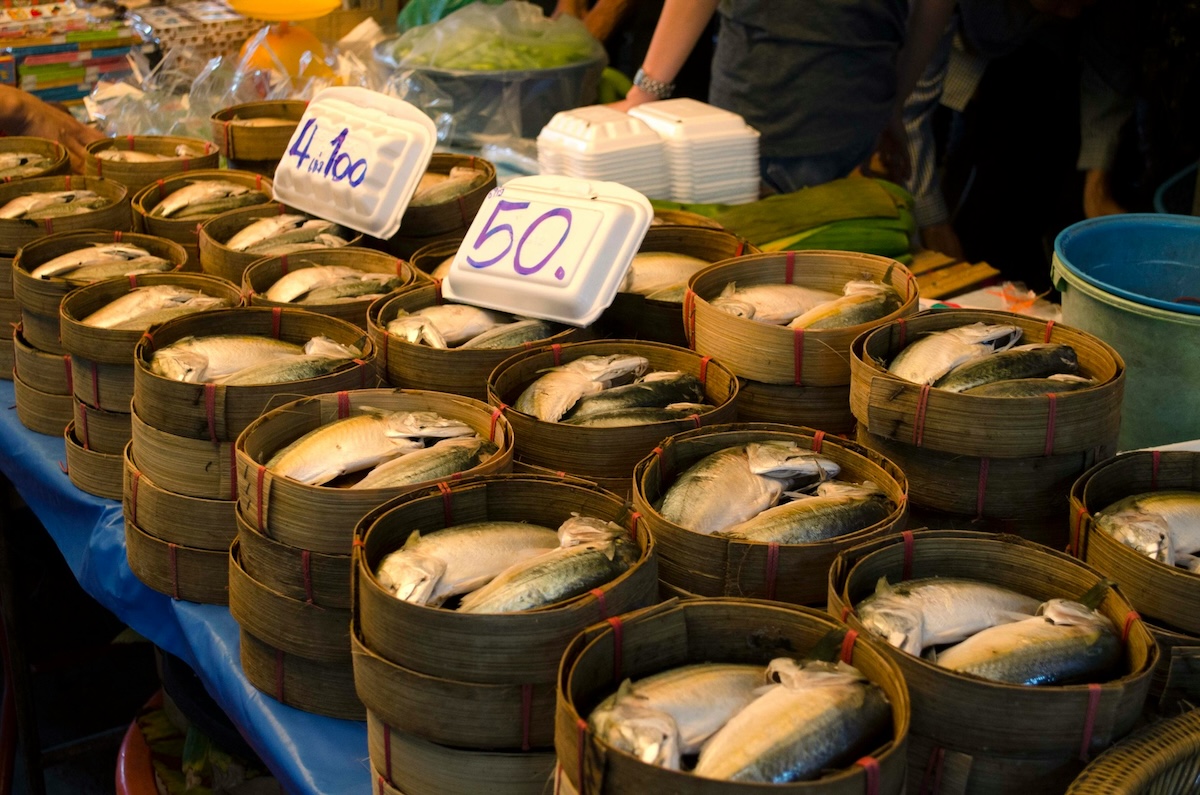
Fresh fish baskets at a local market, neatly sorted and priced. (Source: Juan Montano via Unplash)
Morning markets are common across Thailand, from major cities to small towns.
They are not limited to a few well-known locations. In most cities and towns throughout the country, small morning markets are woven into residential neighborhoods and usually disperse once the sun rises. By taking an early walk around their accommodation or asking local residents, travelers can easily come across these modest trading spaces, where everyday life is most clearly reflected.
- Warorot Market (Chiang Mai): This market primarily serves local residents and is generally calm, without a sense of crowding or rush. It offers a wide range of goods, with a strong focus on snacks, dried foods, spices, and prepared dishes. The market typically begins operating shortly after sunrise and is busiest in the early hours of the day, much like many traditional markets in northern Thailand.
- Talat Phlu Morning Market (Bangkok): The name comes from Thai words meaning “market” and “betel leaf,” reflecting its cultural and historical background. In the past, this area was a major wholesale center for areca nuts and betel leaves, which were widely used in traditional Thai betel chewing. Betel leaves were once grown extensively in the fields around Thonburi, mainly by Thai-Chinese families. Today, the area around Talat Phlu and its railway station is still known for long-established family-run eateries and street food, offering a clear sense of Bangkok’s culinary heritage.
- Talat Chao Samran (Phetchaburi): This coastal morning market brings local residents together at dawn to buy seafood freshly landed from nearby waters, along with vegetables and daily food supplies. The atmosphere reflects the rhythm of coastal life, with simple stalls and local breakfast dishes that reveal long-standing eating habits in the area.
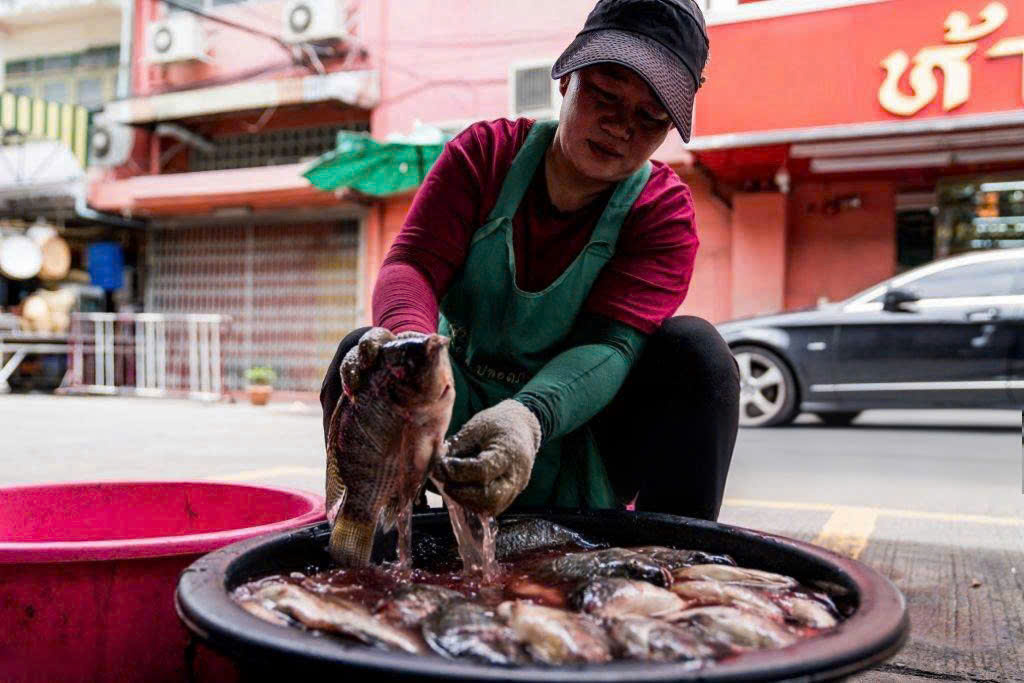
A vendor cleaning freshly caught fish at an early morning local market in Phra Khanong, Bangkok. (Source: Getty Images / SOPA Images)
What Travelers Should Know
- Short operating hours: Morning markets usually open before sunrise and are at their busiest during the first few hours of the day. As the sun rises, many stalls begin to pack up as residents return to their daily routines.
- Small portions, low prices: Most food and goods are sold in small quantities, typically enough for a single meal or one day’s use. Prices are therefore generally low and accessible.
- Fast, minimal exchanges: Transactions tend to be quick and to the point. Shoppers choose efficiently, speak briefly, and rarely linger at a stall. The market environment favors practicality over extended conversation or observation.
- Discreet behavior: For vendors, the market is a regular workplace. Photography and close observation should be done with restraint, avoiding any disruption to buying and selling activities.
Best Time to Experience
- Time of day: From around 5:30 to 8:00 a.m., when stalls are freshly set up and local residents are most active. After 8:00 a.m., many vendors begin to close for the day.
- Day of the week: Weekdays offer a clearer view of everyday local routines. Weekends can be busier.
- Season: Morning markets operate year-round, but the dry season (roughly November to February) is more comfortable for walking and observing.
Eating Regional Food Where It Is From
Thai cuisine varies distinctly from region to region — from the North and Isan to the Central Plains and the South — shaped by local geography, climate, and neighboring cultural influences. It is in local eateries, markets, and street stalls within each region that these flavors are preserved most faithfully: simple in presentation, affordable in price, and often bolder than the versions commonly found in major cities.
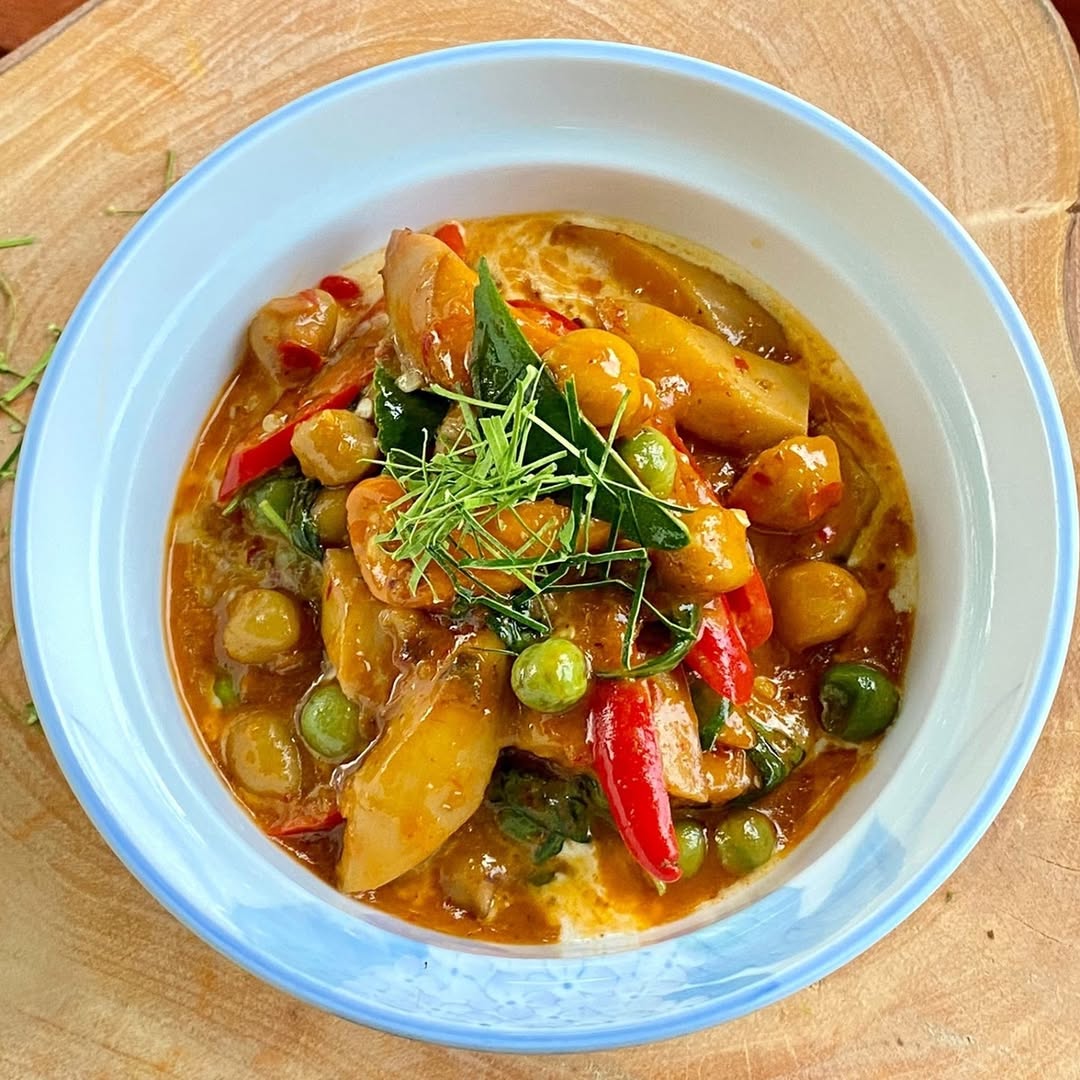
Thai curry with vegetables, served fresh and comforting. (Source: Instagram — @arcadiafinefoods)
This experience is closely tied to Thailand’s geography, with each region shaped by clear and distinct characteristics.
- Isan (Northeast): With a dry landscape, Isan cuisine relies heavily on sticky rice, wild vegetables, and fermented foods such as som tam variations, larb (herb-seasoned minced meat salad), nam tok, and dishes made with pla ra (fermented fish). Wild greens and local herbs are a regular part of daily meals. Salty, sour, and spicy flavors help preserve food and stimulate the appetite in a harsh climate.
- Northern Thailand: Cooler temperatures and access to forest ingredients shape a cuisine that is lighter in oil and rich in herbs. Common dishes include gaeng om (herb soup), local versions of khao soi, sai ua (herb sausage), and nam phrik noom served with boiled vegetables. Portions tend to be smaller, with rounded flavors that are not overly sharp or spicy.
- Southern Thailand: Strongly influenced by the sea and historic trade routes, southern food is known for dishes such as gaeng som (sour and spicy curry), gaeng tai pla, khao yum (herb-mixed rice), and fresh seafood seasoned with bold spices and pronounced heat.
- Central Thailand: As a crossroads region, the Central Plains are home to dishes like pad kra pao, khao moo daeng, and tom yum, typically prepared with more balanced seasoning. Even so, noticeable differences remain between neighborhoods and local eating habits.
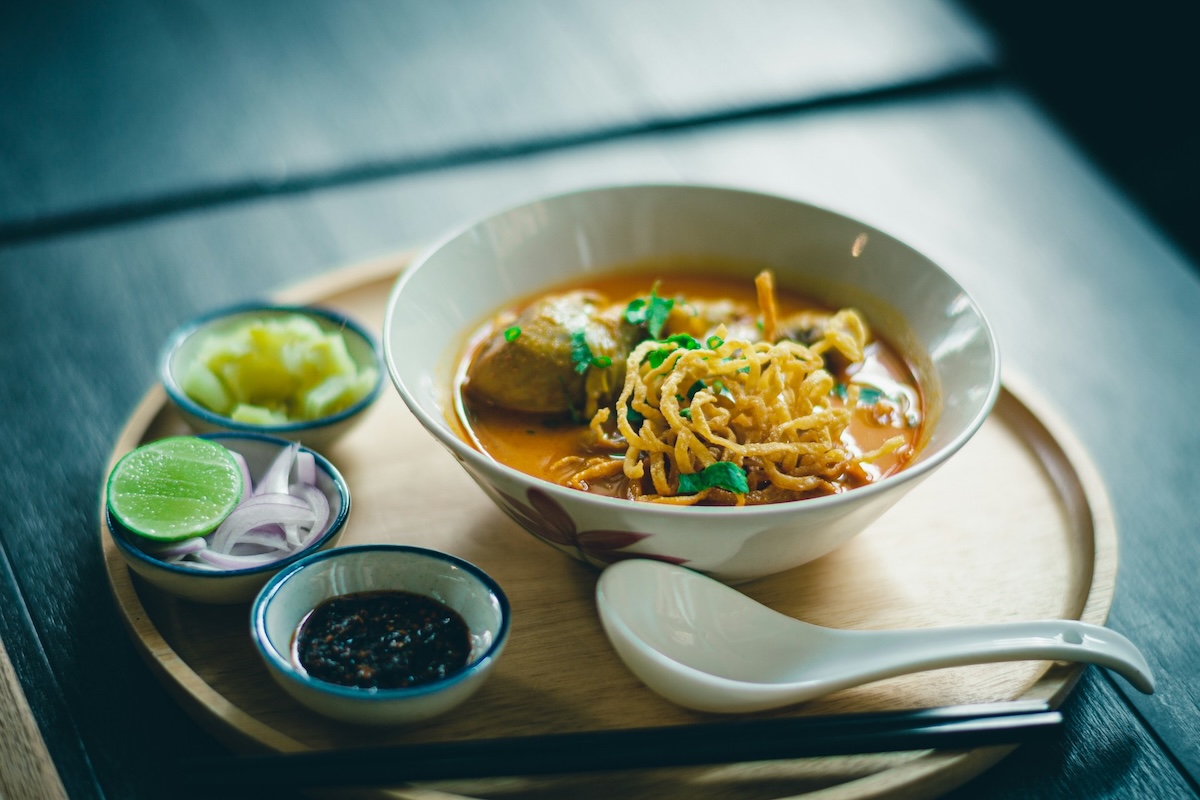
A relaxed dining moment reflecting everyday Thai lifestyle (Source: 8-low-ural via Unplash)
Seasoning follows familiar habits, and ingredients are chosen from what is readily available nearby. The resulting flavors are not designed to please outsiders, but to suit the rhythm of daily life, the climate, and the tastes of each region.
What Travelers Should Know
Local food reflects how people adapt to the places they live. Eating dishes where they originated helps visitors understand the link between cuisine and everyday life.
- Follow the queue: Choose busy stalls with a high turnover. Local crowds are usually the best indicator of freshness and food safety.
- Cost: Low to medium, in line with everyday meals for local residents.
Best Time to Experience
- Regional cooking in Thailand is closely tied to seasonal produce. Northern wild greens, river fish in the Central region, and seafood in the South are at their best during their natural seasons. Eating at these times allows dishes to reflect how local people have long prepared and enjoyed them.
- In smaller provinces, many eateries operate only during specific hours. Arriving at regular mealtimes offers the most authentic view of everyday local dining habits.
Traveling by Train Through the Countryside
Traveling by train through Thailand’s countryside offers a way of seeing the country that is both unhurried and grounded in everyday life. From the hills of the North to the plains and plantations of the South, the landscape unfolds steadily outside the carriage window, accompanied by scenes of ordinary local activity. Long-established rail routes and low fares make the train more than a means of transport — they provide a natural, complete way to observe rural Thailand as it is lived.

A local train crossing the countryside (Source: Getty Images/ dssama)
What to Expect
- A slower rhythm of travel: Trains move at a pace that allows the scenery to reveal itself gradually rather than pass in a blur. Rice fields, small villages, roadside markets, and daily routines come into view, turning the journey into time for observation and reflection.
- Simple, practical comfort: Options range from basic seating to air-conditioned sleeper cars on longer routes. Facilities are modest, but generally sufficient for a stable and comfortable journey.
- Everyday food on board: On most Thai trains, including third-class services, vendors walk through the carriages selling fruit and soft drinks. Travelers can also bring their own food and drinks, purchased at the station or nearby shops.
- Changing landscapes: The scenery shifts with geography — from northern hills to central plains and farmland, then on to coastal areas and plantations in the South. These transitions highlight the country’s diversity, segment by segment along the route.
What Travelers Should Know
- Train travel usually takes longer than flying or traveling by bus. A single journey can last from a few hours to an entire day, making it best suited to travelers with flexible schedules and a slower pace in mind.
- Prices range from low to medium, depending on seat class and distance. Basic seating is very affordable, while air-conditioned sleeper cars remain reasonably priced compared with other transport options.
- Keep noise to a minimum, offer seats to elderly passengers and children, and avoid loud conversations. When taking photos, be mindful of your surroundings and avoid disrupting the daily routines of local passengers.
Best Time to Experience
- Time of day: Early morning to early afternoon is when trains carry more local passengers, landscapes are clearer, and onboard life feels most natural.
- Season: The cooler, dry months (roughly November to March) offer more comfortable temperatures and better visibility for scenery. During the rainy season (around June to October), the countryside is greener, though delays can occur on some routes.
Participating in Local, Community-Based Festivals
Taking part in a local festival in Thailand means entering a shared community space, where rituals express gratitude, spiritual renewal, and a close connection with nature. These festivals are woven into everyday religious and cultural life rather than staged as special events. For Thai communities, they help sustain spiritual values amid modern living, reaffirming long-held relationships between people, the natural world, and belief systems passed down through generations.
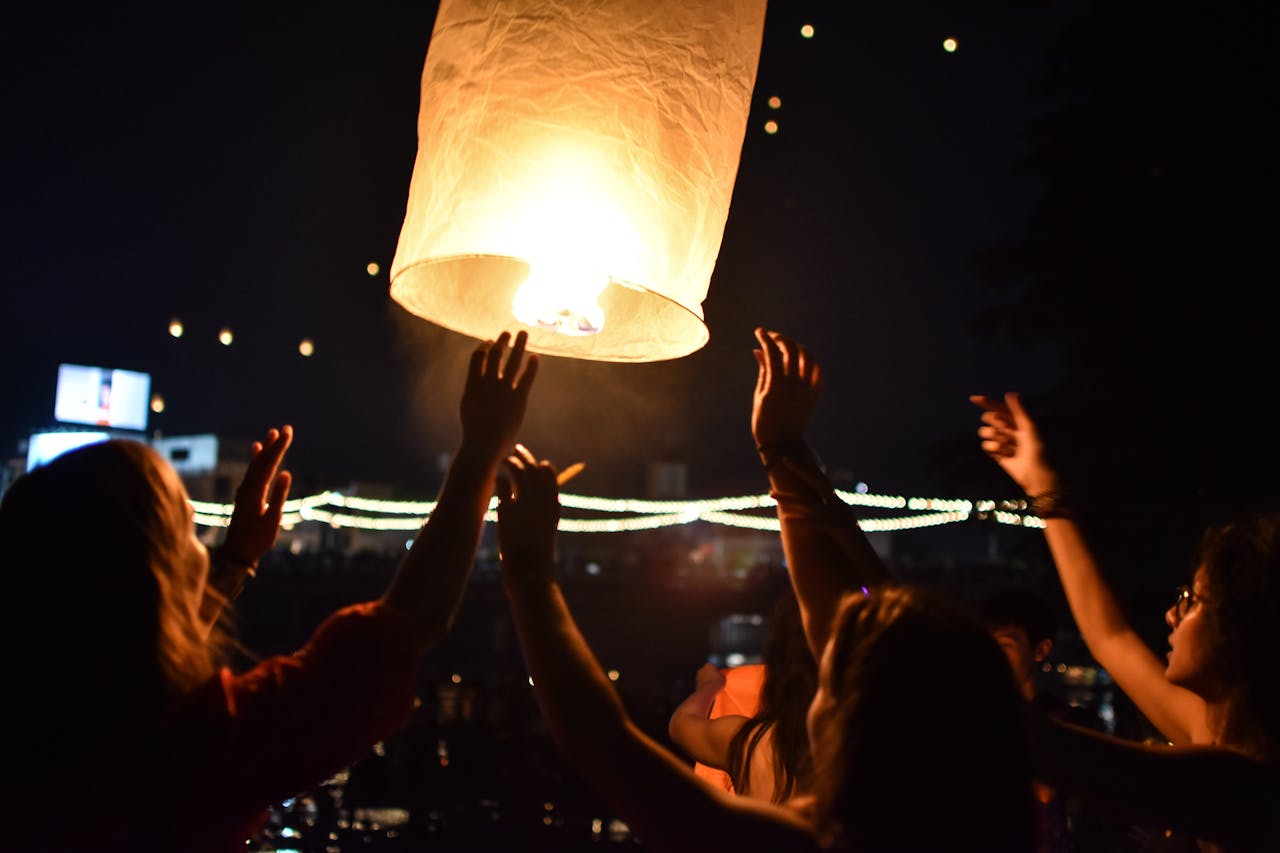
Lanterns lifting wishes into the night sky (Source: Olivier Darny via Pexel)
Across Thailand, many community-based festivals are tied to the lunar calendar and agricultural cycles. Examples include Bun Bang Fai (Rocket Festival) in Isan, where communities mark the arrival of the rainy season; Phi Ta Khon in Dan Sai (Loei), blending spiritual beliefs with village storytelling; and Loy Krathong, which in smaller towns remains a quiet act of gratitude to waterways rather than a large-scale spectacle.
In the North, local versions of Yi Peng are often observed within temple grounds and neighborhoods, focusing on merit-making and family participation. While the names and rituals vary by region, these festivals share a common purpose: reinforcing community bonds, spiritual balance, and continuity with long-held traditions.
What Travelers Should Know
- Timing: Most community festivals follow the lunar calendar. Key rituals usually take place within a limited number of hours rather than across an entire day.
- Cost: Low. Expenses are generally limited to small offerings or voluntary contributions.
- Attitude and etiquette: Dress modestly and maintain quiet behavior in ceremonial spaces. Observe and follow local practices. Avoid close-up filming or photography during solemn rituals.
Best Time to Experience
- By season and festival calendar: Many community-based festivals follow the lunar cycle and often take place between May and July, as well as in November.
- Staying informed: Travelers can check festival dates through official Thailand tourism websites and trusted travel information platforms, which typically list events by region and month. For smaller, community-focused festivals, it is advisable to confirm details closer to the event date to ensure accuracy.
Spending Time in a Rural Community-Based Tourism Area
Spending time in a rural community-based tourism area offers a slower, more direct way to engage with local life. Rather than observing from the outside, visitors take part in everyday routines, where tourism exists alongside work, cultural practices, and family life within the community.
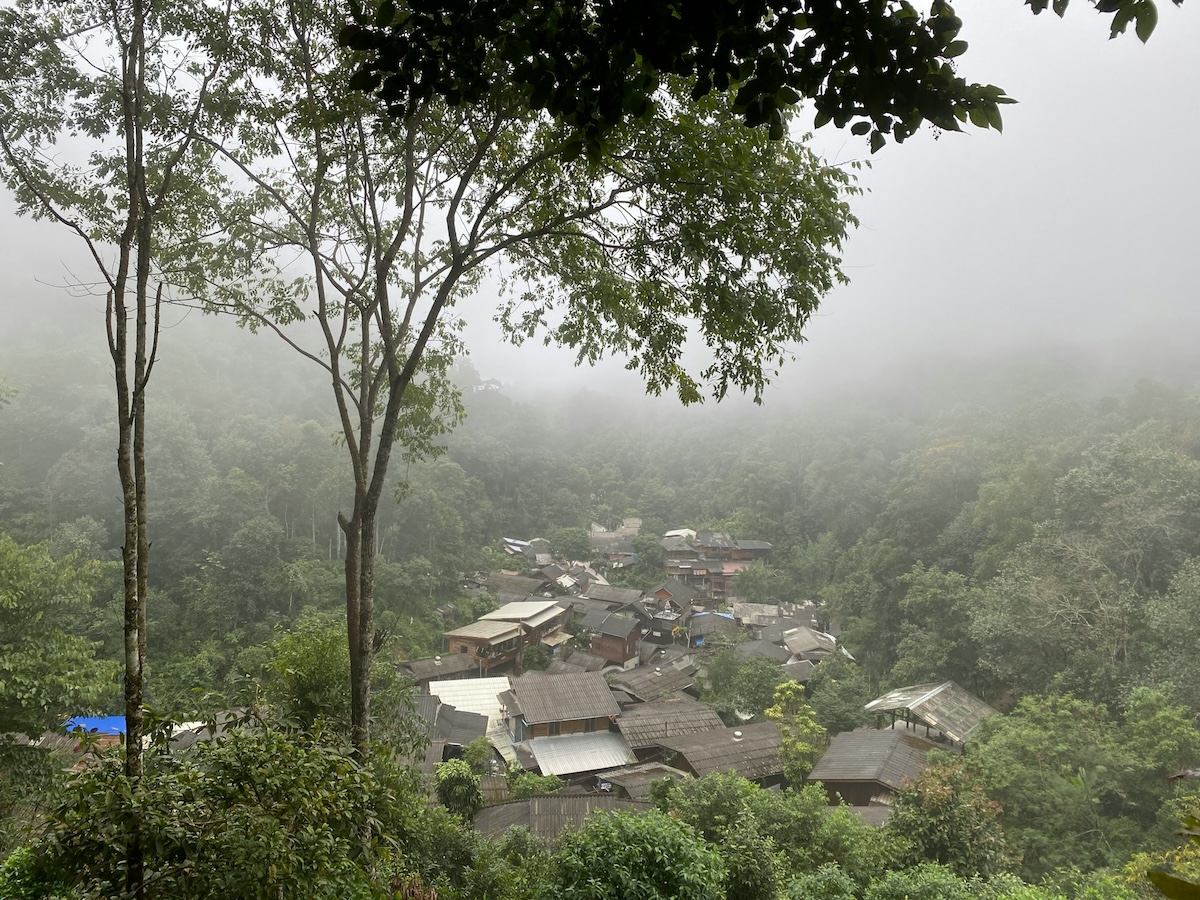
Mae Kampong Village - Chiang Mai in the mist. (Source: Mike Anderson via Unplash)
Community-based tourism is well established in many rural areas of Thailand, particularly in places that have preserved traditional village structures and a strong cultural identity, such as:
- Mae Kampong (Chiang Mai): A mountain village known for homestays, coffee roasting, herbal tea making, and forest-based ecotourism activities.
- Chiang Rai: Villages shaped by Lanna culture, where visitors can learn local cooking, textile weaving, and traditional handicrafts.
- Isan (Northeast Thailand): Off-the-grid rural village experiences centered on rice farming, local markets, and a simple agricultural way of life.
- Southern Thailand: Coastal and mangrove communities in areas such as Phang Nga or the Surin Islands, home to the Moken people, where activities include fishing, kayaking through mangroves, and traditional coastal living.
Key reasons why rural community-based tourism in Thailand holds lasting value:
- Authentic cultural experience: Visitors live alongside local residents, take part in daily activities, and gain deeper insight into traditional customs, arts, and handicrafts. This often creates more meaningful and lasting memories than conventional tourism.
- Local economic support: Income from community-based tourism flows directly to residents, helping sustain traditional livelihoods and improve living standards.
- Environmental and cultural conservation: Tourism is managed by the community itself, supporting the protection of natural environments, forest resources, and local cultural heritage from the pressures of mass tourism.
- Human connection: These experiences foster genuine interaction between visitors and residents, offering insight into everyday life, perspectives, and the quiet hospitality of Thailand’s rural communities.
What Travelers Should Know
- Pace and length of stay: Community-based experiences are not suited to rushed itineraries. Staying at least one to two nights allows visitors to settle into daily routines, from shared family meals to the village work rhythm.
- Cost range: Low to medium. Fees typically include accommodation, meals, and basic activities. In northern villages such as Mae Kampong (Chiang Mai) or parts of Isan, a homestay with dinner and breakfast usually ranges from 500–1,200 baht per person. In the South, mangrove or fishing communities in areas like Phang Nga or Surat Thani tend to be slightly higher, around 800–1,500 baht, reflecting the inclusion of nature-based activities such as boating, forest walks, or fishing with local residents. Most of this cost is paid directly to the local community.
- Etiquette and expectations: These are real living environments, not resorts. Dress simply, remove shoes when entering homes, ask permission before taking photos, and observe how local residents behave. Follow the guidance of local hosts or community guides to ensure respectful interaction.
Best Time to Experience
- By season: The dry season and the early part of the rainy season are generally the most suitable times for agricultural and nature-based activities.
- Staying informed: Travelers can check official Thailand tourism websites, local community pages, or platforms focused on sustainable travel to find up-to-date activity schedules for individual villages.
Learning a Traditional Skill From a Local Practitioner
Travelers can take part in a home-style cooking session, try their hand at weaving, make traditional crafts, plant rice, or learn local folk music rhythms — all within the everyday settings of local life. Learning traditional skills directly from local practitioners offers a meaningful way to connect with Thailand’s living heritage, providing insight into the values, knowledge, and rhythms that continue to shape the “Land of Temples” today.
- Northern Thailand (Chiang Mai, Chiang Rai, Sukhothai): This region is well suited to in-depth cultural experiences centered on agriculture, food, and traditional crafts.
- Cooking and organic farming: Chiang Mai is known for cooking schools such as Thai Farm Cooking School, as well as smaller classes run on local farms. Participants learn about herbs, spices, and cultivation methods directly from the garden.
- Handicrafts (weaving and ceramics): Ban Kang Wat (Chiang Mai) is a small artist community where visitors can join workshops in pottery, painting, and handmade crafts.
- Textile weaving and indigo dyeing: Provinces such as Chiang Rai and Sakon Nakhon (in the Isan region) are home to weaving cooperatives where local artisans pass on traditional techniques using natural dyes and handlooms.
- Agricultural activities: Quiet rural areas around Sukhothai and Chiang Mai often offer hands-on farming experiences, including plowing fields and planting rice alongside local residents.
- Central Thailand (Bangkok, Ayutthaya): This region is more suitable for learning refined skills such as ceramics and performing arts.
- Ceramics: Koh Kret (Nonthaburi, near Bangkok) is known for its Mon community of potters. Visitors can try traditional pottery techniques at riverside workshops.
- Music and performing arts: Bangkok’s cultural centers and art schools are the best places to find short courses in Khon masked dance, traditional Thai musical instruments such as the ranat ek, or Muay Thai training.
- Cooking: Bangkok’s established cooking schools offer more advanced courses focused on royal Thai cuisine or contemporary interpretations of Thai food.
- Southern Thailand (Phuket, Krabi, Koh Samui): Here, experiences are closely tied to coastal culture and southern cuisine.
- Cooking: Most resort islands offer cooking classes featuring southern specialties such as Massaman curry and seafood-based tom yum, using fresh local ingredients.
- Handicrafts: In some areas, small workshops teach traditional crafts made from seashells or coconut leaves.
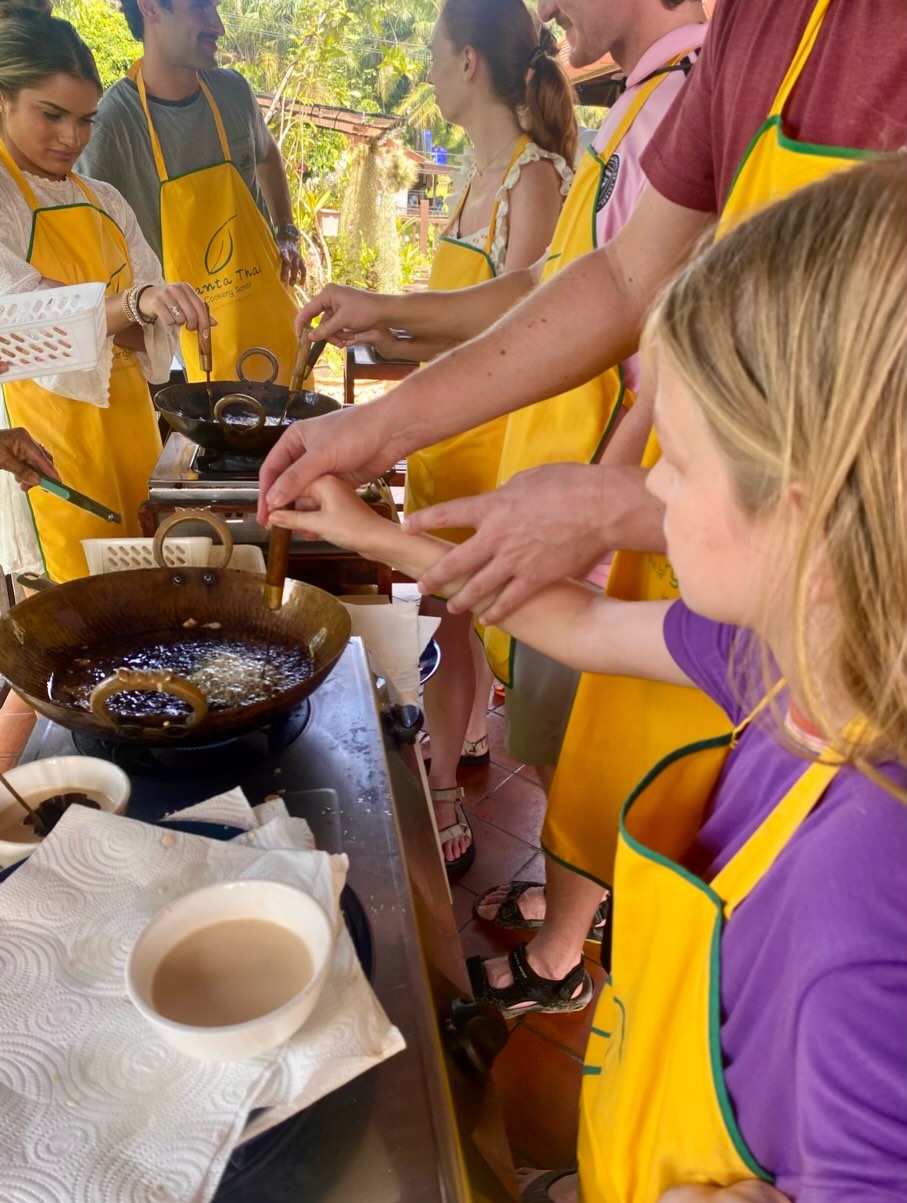
A hands-on cultural workshop shared across generations. (Source: Instagram — @100_days_away_blog)
What Travelers Should Know
To ensure a thoughtful and rewarding cultural learning experience in Thailand in 2026, travelers should keep the following practical points in mind:
- Time commitment: Most activities last from half a day to a full day. Some experiences may extend longer when combined with a homestay.
- Cost range: Local workshops: Approximately 800–1,500 baht. These are usually small, home-based sessions led by artisans or village cooperatives. Professional centers or farm-based programs: Around 2,000–4,500 baht. Fees typically include transportation, higher-quality materials, and lunch.
***Note: Some senior or highly respected practitioners may not charge a fixed fee, instead accepting voluntary contributions or charging only for materials. Visitors are encouraged to offer an appropriate amount to support their ongoing craft and cultural preservation efforts.
Best Time to Experience
- Year-round availability: Cooking classes and handicraft workshops are offered throughout the year.
- Best season: From November to February, conditions are ideal. Cooler, drier weather makes outdoor activities—such as hands-on farming in Sukhothai or indigo dyeing in Chiang Rai—more comfortable. This period also coincides with the harvest season, when village workshops are at their most active, creating a lively local atmosphere.
- Morning sessions (8:00–11:00 a.m.): Best for cooking classes, when local markets are at their freshest, and for agricultural activities before midday heat sets in. Mornings are also when practitioners tend to be most focused when sharing detailed techniques.
- Late afternoon (3:00–6:00 p.m.): Well suited to music, classical dance, or Muay Thai sessions. The quieter pace of the late afternoon supports deeper concentration on rhythm, movement, and expression.
Experiencing Everyday Buddhism Respectfully
Over generations, Buddhism has become an inseparable part of Thailand’s spiritual life. It is not confined to temples or major religious holidays, but quietly shapes how people think, behave, and seek balance in daily life. From the morning ritual of offering alms, to brief visits to the temple after work, or moments of stillness at the end of a long day, these practices continue as a natural part of everyday living.
It is within these ordinary moments that travelers can encounter Buddhism in its most accessible form—not through ceremonies designed for visitors, but by observing and gently aligning with the spiritual rhythm that has sustained local communities for centuries. This may involve helping prepare small food offerings for monks walking barefoot through neighborhood streets, or sitting quietly in a corner of a village temple, watching life unfold at an unhurried pace. Participating in these practices offers insight into mindfulness and gratitude—values that continue to shape the inner life of the country.
Everyday Buddhist Spaces
- Chiang Mai and Northern Thailand: Old wooden temples tucked away in narrow residential lanes (soi) offer a quiet setting for experiencing a sense of calm and reflection.
- Bangkok and Central Thailand: Riverside areas and outer districts such as Thonburi provide a grounded view of how Buddhism continues to exist within a modern urban environment.
- Rural areas (Isan): Here, temples often remain the main centers for cultural life and education within the village.
What Travelers Should Know
- Timing: Alms rounds take place early, usually between 5:30 and 6:30 a.m. Evening chanting typically occurs from 5:00 to 6:00 p.m.
- Cost: Very low. Simple offerings such as fresh food or basic alms items are sufficient, usually costing around 50–150 baht.
- Attitude and etiquette:
- Dress code: Shoulders and knees must be covered.
- Physical boundaries: Do not touch monks; women should be especially mindful of maintaining distance.
- Behavior: When seated, avoid pointing your feet toward Buddha images. Maintain silence and always ask permission before photographing anyone engaged in religious practice.
Best Time to Experience
- Time of day: Early morning is the most sacred and tranquil period, when temples are quiet and daily rituals take place with minimal interruption.
- Season: The experience is meaningful year-round, but is especially resonant during the Buddhist Lent (Vassa, roughly July to October) and around Loy Krathong in November, when temples become particularly vibrant and illuminated.
Night Markets as Social Spaces
In many residential areas across Thailand, night markets are a regular part of evening life. After work, locals stop by to have dinner, buy ready-to-eat food, or meet familiar faces from the neighborhood. Stalls commonly serve everyday dishes such as pad krapao, khao moo daeng (red pork rice), khao kha moo (braised pork leg with rice), som tam, stir-fried noodles, grilled skewers, Isan sausages, and simple snacks like grilled bananas, khanom krok (coconut pancakes), Thai milk tea, and cooling herbal drinks. Beyond food, markets also offer cut fruit, dried goods, spices, everyday clothing, sandals, small household items, and basic services such as haircuts, shoe repair, or lottery ticket sales. Operating on a steady daily routine, these markets function as informal social hubs within the community.
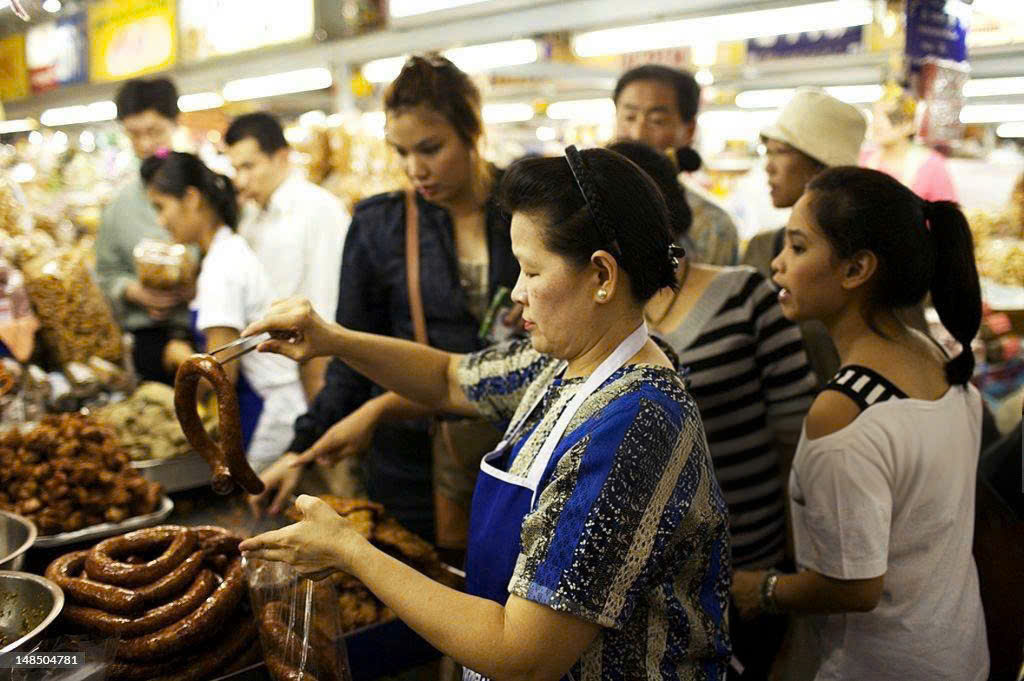
A busy Thai night market where locals buy ready-to-eat food and chat with familiar vendors. (Source: Getty Images / Oliver Strewe)
- Bangkok: Instead of highly commercialized night markets such as Talad Rot Fai (now largely transformed), look for roadside markets in areas around Ratchada or across the river in Thonburi.
- Chiang Mai: Smaller markets outside the Old City, such as Chang Phuak Market, are known for clusters of street food carts serving local favorites.
- Rural areas (Isan): Most small towns host nightly markets, offering one of the most direct and authentic ways to experience regional food and everyday local life.
What Travelers Should Know
- Timing: Most night markets operate from around 5:30 p.m. to 11:00 p.m., with the busiest period between 7:00 and 9:00 p.m.
- Cost: Very low. Common dishes typically cost 40–100 baht per item, making night markets one of the most affordable and satisfying ways to eat in Thailand.
- Attitude and etiquette:
- Sharing space: Be prepared to share tables with strangers when seating is limited.
- Cash payments: Most stalls accept cash only.
Best Time to Experience
- Time of day: After 7:00 p.m., when temperatures cool and local residents begin gathering at the market.
- Season: The dry season, from November to February, is ideal due to lower rainfall and comfortable conditions for outdoor dining. The peak rainy months (September and October) are best avoided, as markets may be affected by weather.
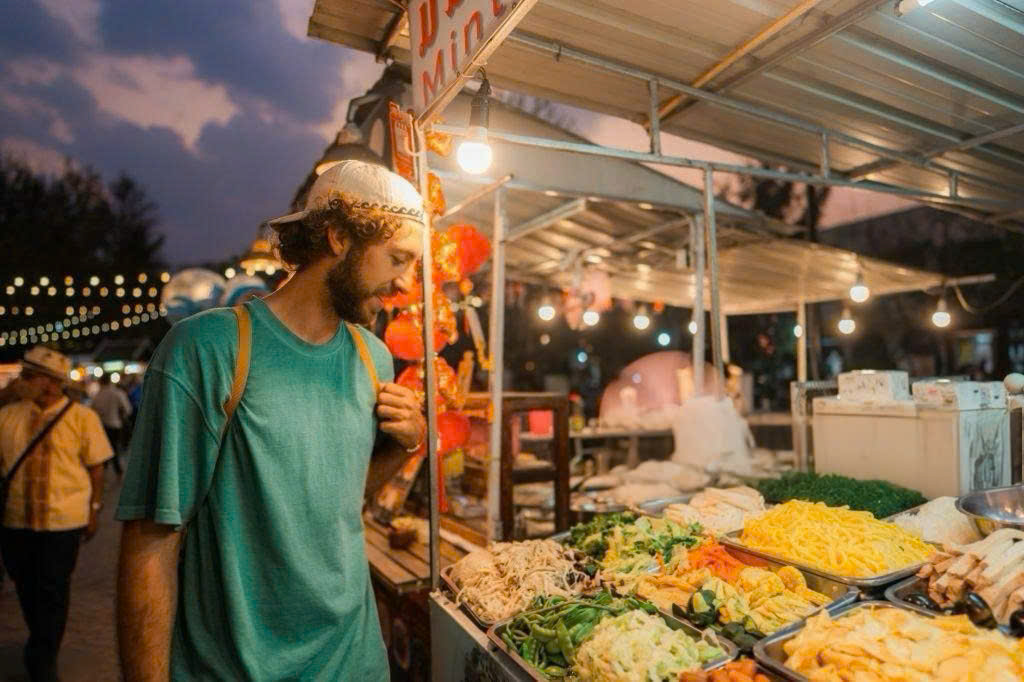
Fresh ingredients and prepared foods on display at a local night market in Thailand (Source: Getty Images / Oleh Slobodeniuk)
Coastal Life Beyond Beach Resorts
Early in the morning along Thailand’s coast, travelers can see fishing boats returning with fresh seafood, locals sorting the catch right on the pier, or fishermen walking along wooden docks to mend nets and fix their boats. These simple activities happen naturally among fishermen, their families, and local vendors as part of everyday coastal life. This experience offers a real glimpse into traditional seaside communities, where daily work and livelihoods are closely connected to the sea—very different from the usual image of beach resorts and holiday relaxation.
Where to experience
- Phuket (East Coast): Instead of the busy west coast beaches, explore the quieter Muslim fishing villages on the east coast, such as non-tourist areas of Rawai Fishing Village or small communities on Koh Sireh.
- Phang Nga Bay: Floating villages and coastal communities here still retain their local character and remain largely separate from mass tourism.
- Southern Thailand (Gulf of Thailand): Provinces like Chumphon and Surat Thani are home to many local fishing villages, offering a slower pace of life and a more authentic coastal atmosphere.
What Travelers Should Know
- Timing: Early morning (around 5:00–7:00 AM) is the best time to see fishing boats return to shore and daily activities at the pier.
- Cost: Free to observe. Travelers can also buy fresh seafood at very affordable prices as a way to support local fishermen.
- Attitude & Etiquette:
- Respect local work: Keep a safe distance and avoid interrupting fishing activities.
- Dress simply: Comfortable, casual clothing is recommended.
- Be mindful when taking photos: Always ask for permission before taking close-up photos of people at work.
Best Time to Experience
- Time of day: Sunrise offers the most authentic and lively atmosphere, with boats arriving and seafood being unloaded.
- By region:
- Andaman Coast (Phuket, Krabi): November to April
- Gulf of Thailand (Koh Samui, Chumphon): May to October
- Avoid stormy or heavy monsoon seasons, as fishing activities may be paused for safety reasons.
Walking Historic Neighborhoods With Local Context
This is not a typical sightseeing tour. It is a walking journey through historic neighborhoods, where every alley and old house carries stories of time, migration, and everyday life. Travelers walk along tree-lined streets, observe a mix of Portuguese, Chinese, and Thai architecture, and hear stories about immigrant communities—such as Chinese and Portuguese settlers—who shaped these areas over centuries.
The experience is usually guided by local residents or long-time guides and includes visits to traditional shops and family-run businesses. It shows that Thailand’s urban history is not a single story, but a layering of cultures that continue to live side by side in today’s neighborhoods.
Where to Experience
- Bangkok
- Bang Rak / Talat Noi / Chinatown (Yaowarat): Known for Chinese trading history, aging shophouses, temples, and a blend of old architecture with modern street art.
- Kudeejeen (Thonburi): A historic Portuguese settlement famous for its traditional egg tarts (Khanom Farang Kudi Chin) and centuries-old churches.
- Phuket
- Phuket Old Town: Home to distinctive Sino-Portuguese buildings that reflect the island’s tin-mining past and long history of international trade.
What Travelers Should Know
- Time: About 3–4 hours for a relaxed walking route. Early morning or late afternoon is best to avoid the heat.
- Cost: Free if you explore on your own. Hiring a local guide usually costs around 1,000–2,000 Baht and is recommended if you want deeper insight into migration history and local stories.
- Attitude & Etiquette: Respect residential spaces. People still live and work here, so keep noise low and avoid disturbing daily life.
Best Time to Experience
- Time of day: Morning (before 10:00 AM) or late afternoon (after 4:00 PM), when the weather is cooler and local shops and cafés begin to open
Long-Stay Living Rhythm (1–2 Weeks in One Place)
Long-stay living is for travelers who want to truly live in Thailand, not just visit. This experience focuses on staying in one place for one to two weeks and building a simple daily routine. Instead of a packed sightseeing schedule, your days slow down: grabbing coffee at a nearby café, shopping for fruit at the local market, joining regular yoga or Muay Thai classes, and working from a neighborhood co-working space.
With time and repetition, daily interactions start to feel natural. The laundry shop owner remembers you, the street food vendor knows your usual order, and familiar faces appear at the gym each morning. Through this steady rhythm, travelers begin to understand how Thai people build a sense of belonging — not through one-off highlights, but through everyday habits and human connections.
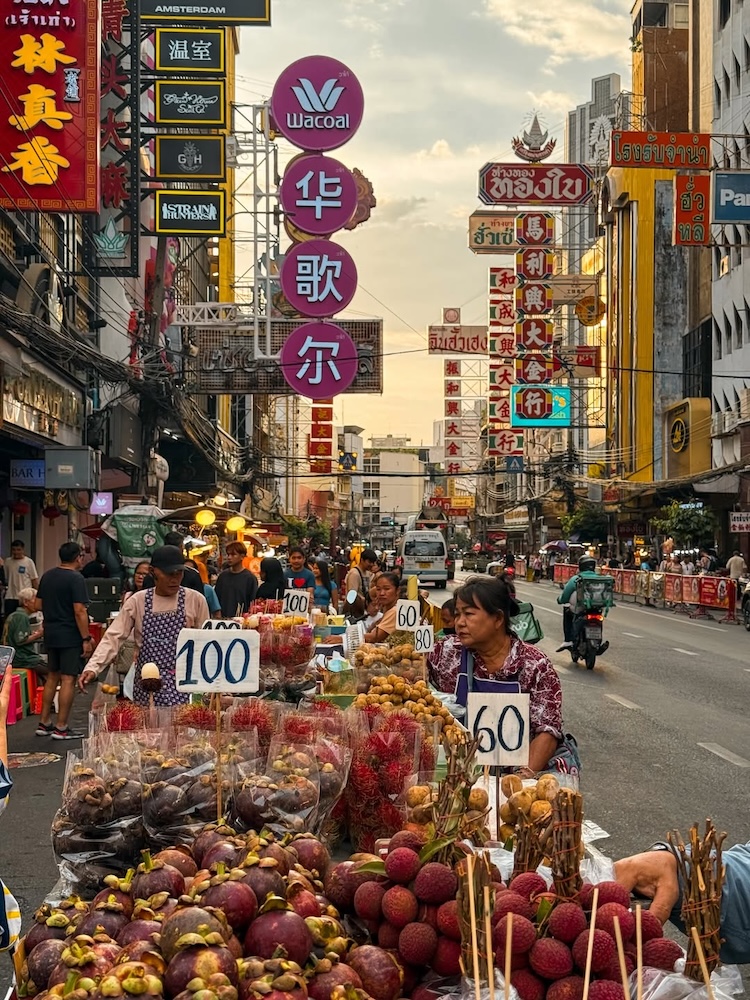
A busy street market at dusk (Source: Instagram — @intothethailand)
Where to Experience It
- Chiang Mai (Nimman or Santitham): A popular base for digital nomads, with many cafés, gyms, and co-working spaces within walking distance.
- Bangkok (Ari or Phra Khanong): Calm, livable neighborhoods that balance modern city life with strong local character.
- Phuket (Phuket Town): Ideal for long stays surrounded by history, local markets, walkable streets, and regional food.
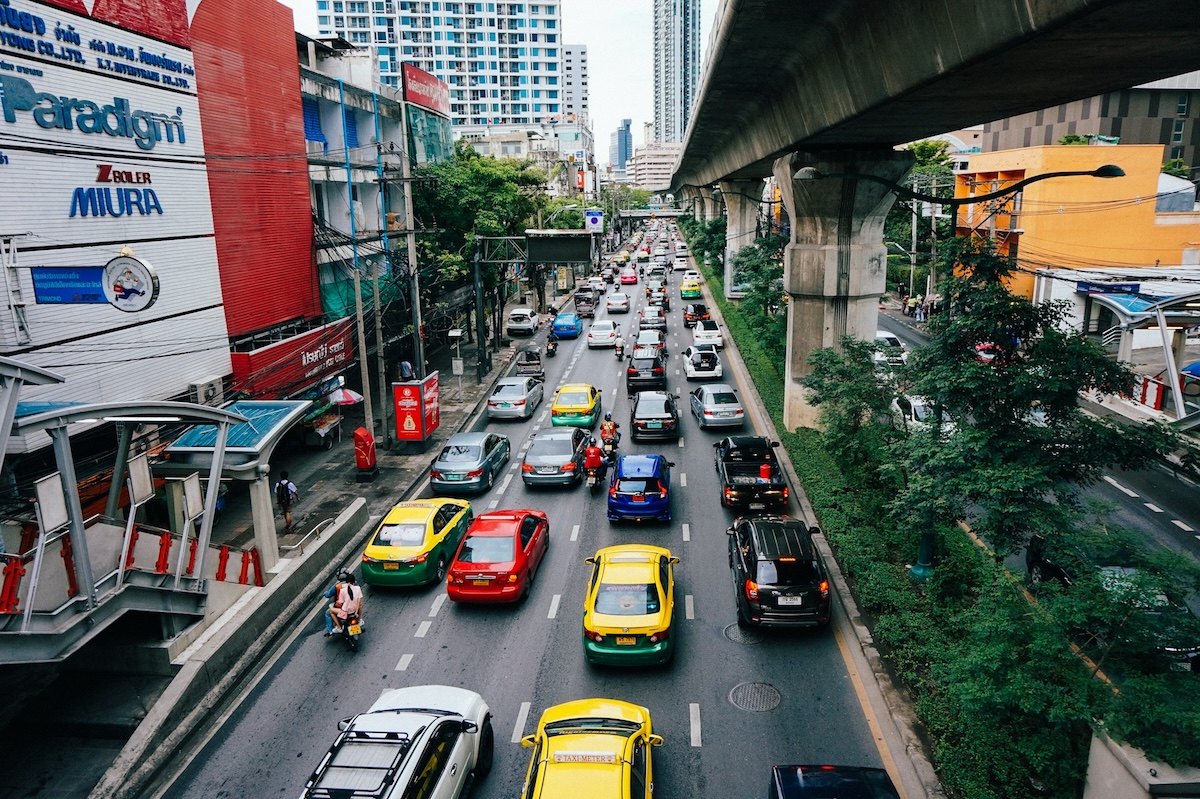
Bangkok city life — busy streets beneath a modern skyline. (Source: Connor Williams via Unplash)
What Travelers Should Know
- Length of stay: At least 7–14 days. This is usually enough time to form personal routines and feel settled.
- Cost: Medium range. You may spend less on tours, but more on short-term apartment rentals (Airbnb or serviced apartments) and daily living activities.
Conversations, Not Attractions
As AI tools and translation apps become more common, the real value of travel is no longer about checking off famous landmarks, but about genuine human connection. This experience focuses on real conversations that go beyond language barriers.
In everyday spaces, short and simple exchanges often lead to natural cultural sharing. Through a few basic questions, gestures, or a smile, travelers can learn about daily habits, how Thai people see life, and small personal stories tied to families and neighborhoods. By listening to how local vendors and residents explain things, respond, and interact, you begin to feel the warmth of everyday communication — and how local culture is passed on through ordinary, human moments. While English is common in tourist areas, learning basic Thai phrases like "Sawatdee kaa/krab" (hello) and "Khop khun kaa/krab" (thank you) greatly enhances interactions, as locals appreciate the effort.
Key Conversation Experiences & Tips:
- The "Wai" and Smiles: A smile is the most important tool for communication, often acting as a universal language. Greeting with a wai (slight bow with palms pressed together) shows respect.
- Speaking Thai (Even a little): Thai people are often forgiving of language errors but appreciate attempts to use the language. You may be corrected on intonation, which is part of the learning experience.
- Navigating Interactions: Tuk-tuk drivers and vendors often use simple English or gestures to communicate ("Where you go?", "How much?").
- Cultural Nuances: It is important to remain polite, gentle, and keep your cool, as raising your voice is considered disrespectful.
- Meaningful Connections: Locals, especially in smaller towns or temple areas, are often open to sharing stories about their lives, offering a deeper cultural insight.
- Handling Miscommunication: When language barriers exist, polite gestures, hand signals, and patience are key.
- Dining and Street Food: Conversations with vendors are often fast-paced and efficient, though they may appreciate learning about food preferences (e.g., "mai phet" for not spicy).
Authentic travel in Thailand is shaped not by how many places are visited, but by how attention is given. Across markets, neighborhoods, temples, and everyday conversations, meaning emerges through participation in daily life — routines that continue regardless of who is watching.
What connects these experiences is continuity. They reflect how Thai people live, eat, work, and relate to one another, shaped by geography, belief, and long-standing social rhythms. In 2026, authenticity in Thailand is found not in attractions, but in learning to be present within everyday life, even for a short time.