A Complete Guide to Transportation in Thailand: How to Travel Smart Across the Land of Smiles
- 1. Understanding Thailand’s Transportation Landscape
- 2. Long-Distance Transportation Options
- 3. Getting Around Cities & Towns (Local Transportation)
- 4. Self-Driving & Rentals
- 5. Choosing the Right Transport: A Practical Decision Framework
- 6. Transportation by Travel Style
- 7. Seasonality, Weather & Transportation Reliability
- 8. Costs & Budget Planning for Transportation
- 9. Common Transportation Mistakes to Avoid
Thailand has long been recognized as one of the world’s most welcoming travel destinations. The warmth of the “Land of Smiles” is reflected not only in the friendliness of its people and the richness of its cuisine, but also in a transportation network that connects bustling cities, quiet countryside towns, and remote islands across the country.
Despite this extensive connectivity, navigating Thailand’s transportation system can sometimes feel confusing for first-time visitors. With so many options—domestic flights, trains, buses, ferries, and urban transit—choosing the most suitable way to travel between destinations is not always straightforward.
In practice, Thailand’s transportation system does not always operate in ways that immediately feel intuitive. Travelers who move around without preparation may encounter avoidable frustrations, such as spending long hours in Bangkok’s rush-hour traffic or missing the last ferry to an island because transfer times were underestimated.
Efficient travel in Thailand is therefore not simply about choosing the fastest option. It is about choosing the right one. The best transportation choice usually balances several key factors: time, budget, comfort, and travel distance.
With a thoughtful transportation plan, travelers can reduce uncertainty and focus more fully on enjoying the journey. When getting around becomes simple and predictable, it becomes easier to appreciate the culture, landscapes, and hospitality that make Thailand such a memorable destination.
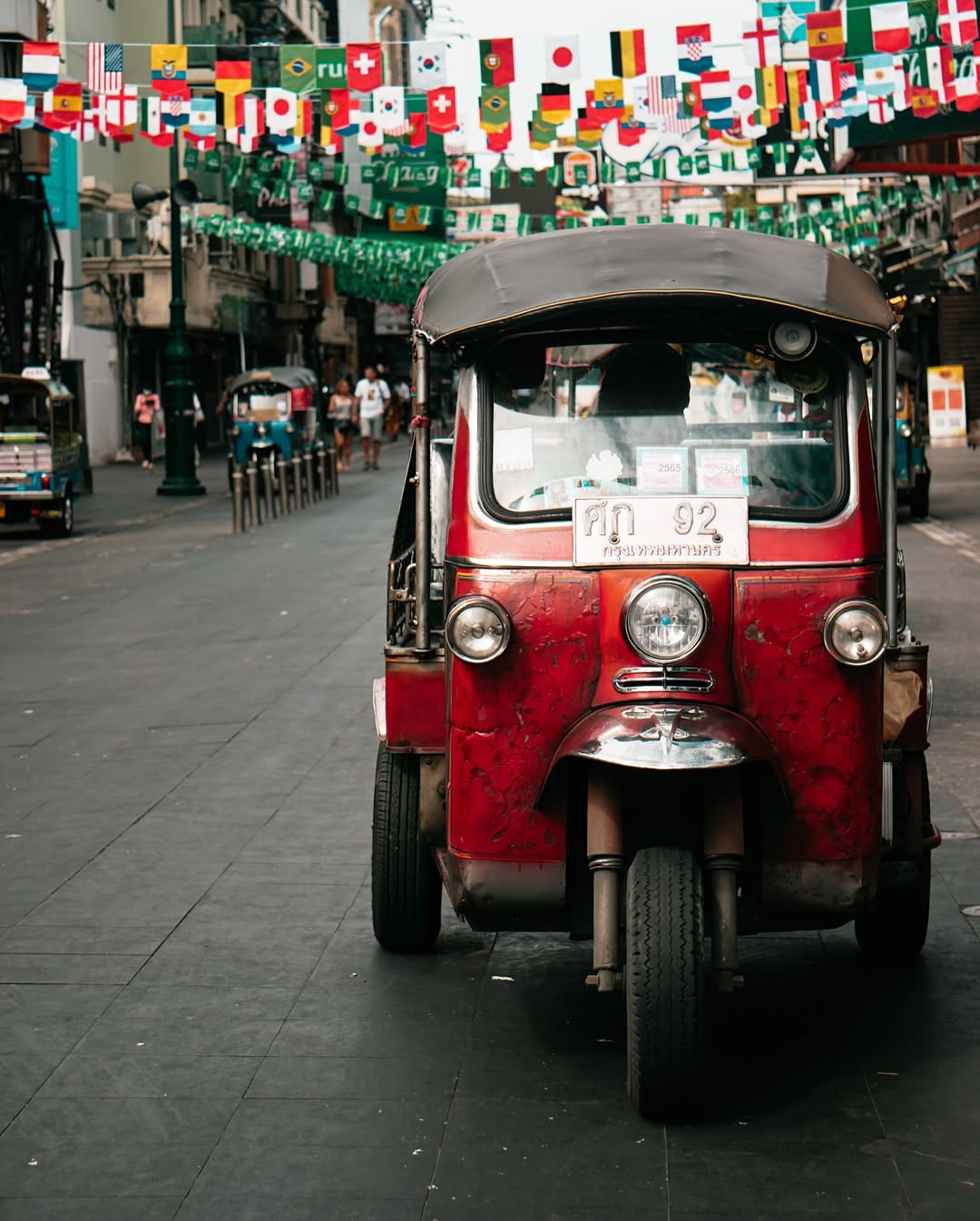
Tuk-tuks and lanterns in Bangkok’s Chinatown (Source: Instagram — @bank__worawut)
1. Understanding Thailand’s Transportation Landscape
Before exploring each mode of transport in detail, it is essential to first build a mental map of how the country’s transportation system actually functions. Thailand not only possesses a relatively modern infrastructure network but also retains distinct regional characteristics, creating a layered and interconnected mobility ecosystem.
The “Hub-and-Spoke” Logic
With Bangkok at its center, Thailand’s transportation system largely follows a hub-and-spoke model, radiating outward in multiple directions. The capital is not only the country’s primary international gateway but also a critical junction linking the misty mountains of the north, the island-studded southeast coast, and the fertile central plains. Understanding this structure allows travelers to optimize their itinerary, turning Bangkok into a strategic stopover rather than merely a tiring transit point.
Regional Differences in Connectivity
Transportation options vary significantly between regions, and each area often requires a slightly different approach to travel.
- Major cities: In large urban areas, convenience and efficiency are usually the main priorities. Urban rail systems such as BTS and MRT, along with ride-hailing services, help travelers move around the city while avoiding heavy traffic congestion.
- Coastal and island regions: Travel in coastal areas depends heavily on ferry schedules, weather conditions, and seasonal demand. High-speed boats and passenger ferries play a central role in connecting islands and coastal destinations.
- Mountainous regions: Flexibility becomes essential, and long-distance buses or private vehicles are often the most practical options for navigating winding roads and remote terrain.
Understanding these regional differences allows travelers to adapt their expectations and choose transportation that fits the local conditions.
2. Long-Distance Transportation Options
Traveling between regions in Thailand involves more than simply covering distance. Each transportation option offers different advantages in terms of speed, comfort, cost, and overall travel experience.
2.1. Domestic Flights: Prioritizing Speed
For travelers with limited time, domestic flights are often the fastest way to travel across Thailand. Flights between major cities—such as Bangkok, Chiang Mai, Phuket, or Krabi—typically take between one and two hours.
However, the total travel time should also include transportation to and from the airport, check-in procedures, and baggage policies. When these factors are considered, flights remain the most efficient option for long distances but may not always be necessary for shorter routes.
2.2. Trains: A Slower but Scenic Alternative
Unlike domestic flights, train travel in Thailand is slower but offers a more relaxed journey through the countryside. Overnight sleeper trains are a practical option for long journeys and can help travelers save on accommodation costs. While the railway network still has limitations in terms of speed and coverage, it offers something rare in return: wide-open views of the countryside drifting past the train window—scenes that no other form of transport can quite replicate.
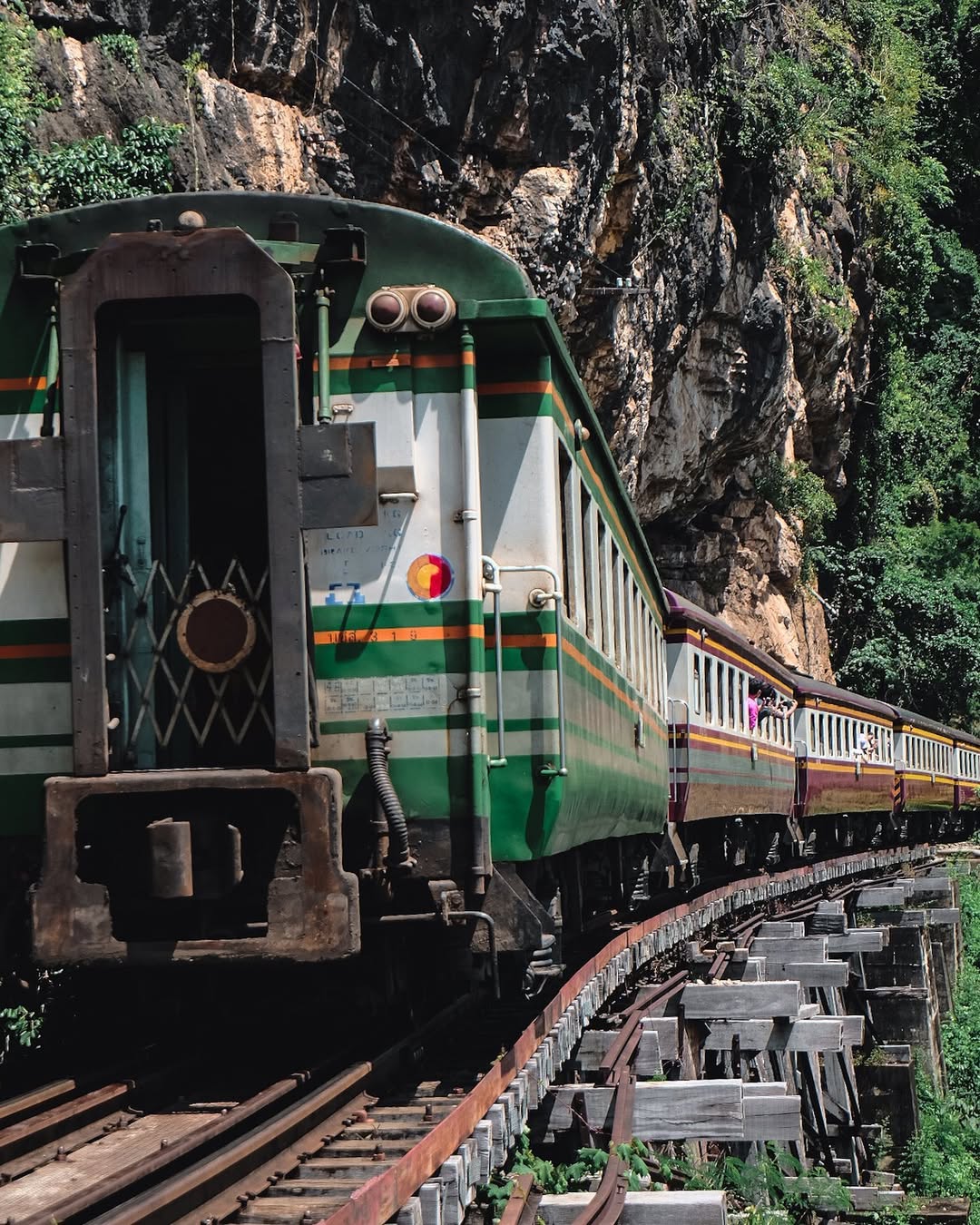
A breathtaking curve on the Death Railway (Source: Instagram — @im.ha_hmiee)
2.3. Coaches and Minivans: Flexibility into Every Corner
Long-distance buses and minivans form the backbone of Thailand’s interprovincial transportation system, reaching many towns that are not served by trains or airports.
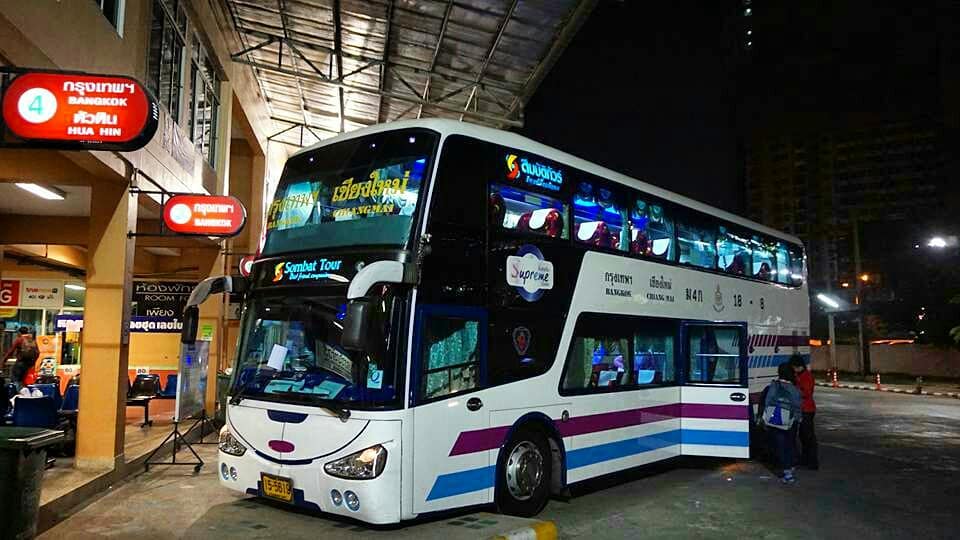
Night departures from Bangkok’s bus terminal (Source: Instagram — @yojalanjalandab)
- Long-distance coaches: These buses are generally comfortable and reliable, making them a practical option for medium-length journeys between provinces.
- Minivans: Minivans provide frequent departures and direct routes to smaller destinations. However, they offer limited space and may feel less comfortable on longer trips. Travelers often choose them for shorter routes where convenience is the main priority.
2.4. Boats and Ferries: Connecting the Islands
In southern Thailand and coastal regions, ferries and speedboats are essential for reaching island destinations. Services range from large passenger ferries to smaller high-speed boats that connect popular islands.
Because sea travel depends heavily on weather conditions, travelers should check schedules carefully and allow extra flexibility in their plans during the rainy season.
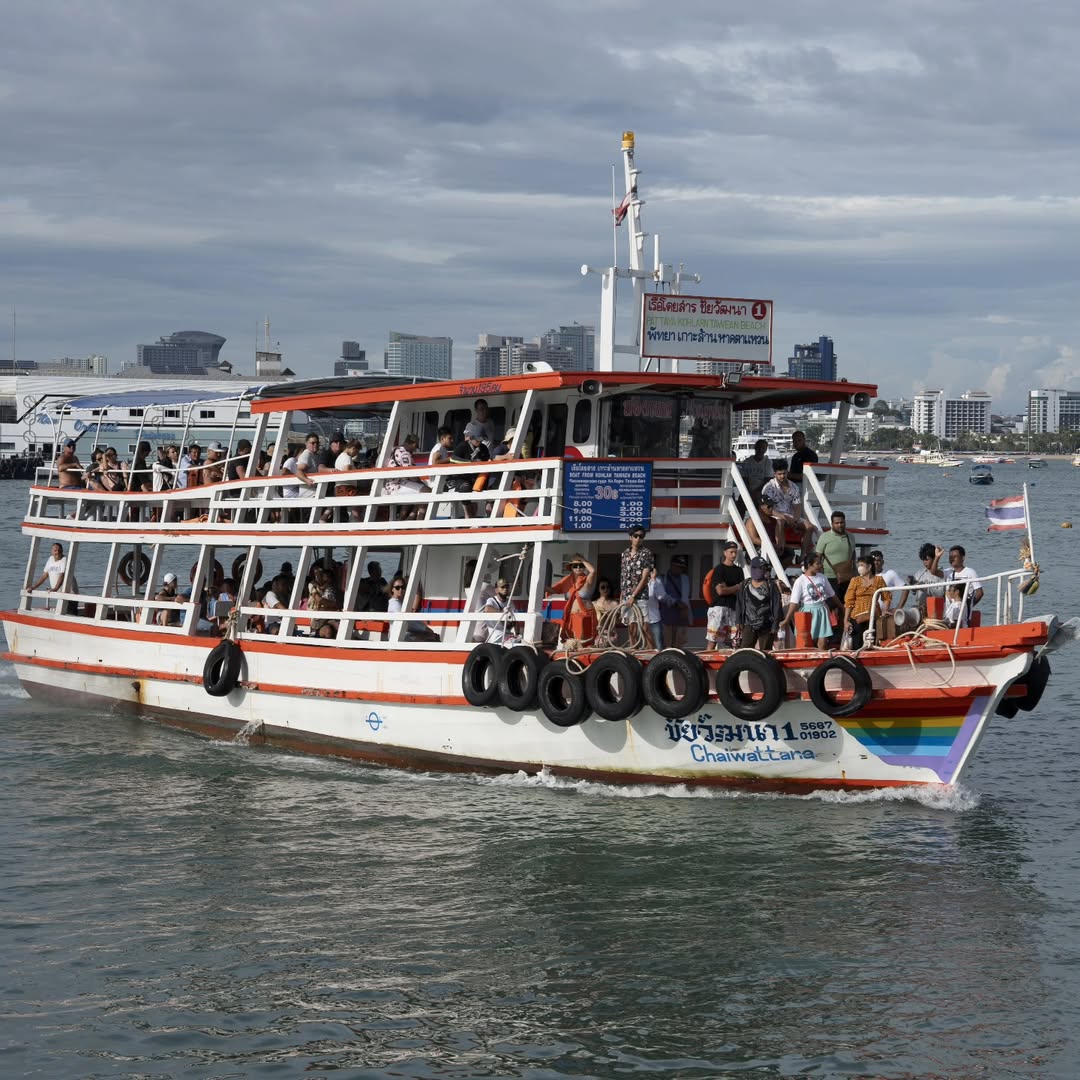
A thai wooden Ferry boat arriving at Bali Hai Pier, Pattaya in Thailand Southeast Asia (Source: Instagram — @strangfotografie)
3. Getting Around Cities & Towns (Local Transportation)
Once travelers arrive in Thailand’s cities, transportation needs shift from long-distance travel to shorter trips within urban areas. Local transportation combines modern transit systems with traditional forms of transport that remain common in everyday life.
3.1. Public Transportation: The Backbone of Urban Mobility
In large cities such as Bangkok, public transportation offers one of the most reliable ways to get around.
Urban rail systems
The BTS Skytrain and MRT subway help travelers avoid the city’s heavy road traffic. These systems are modern, efficient, and easy to navigate, with clear signage in both Thai and English. Stations are well connected to shopping districts, business areas, and many major tourist attractions.
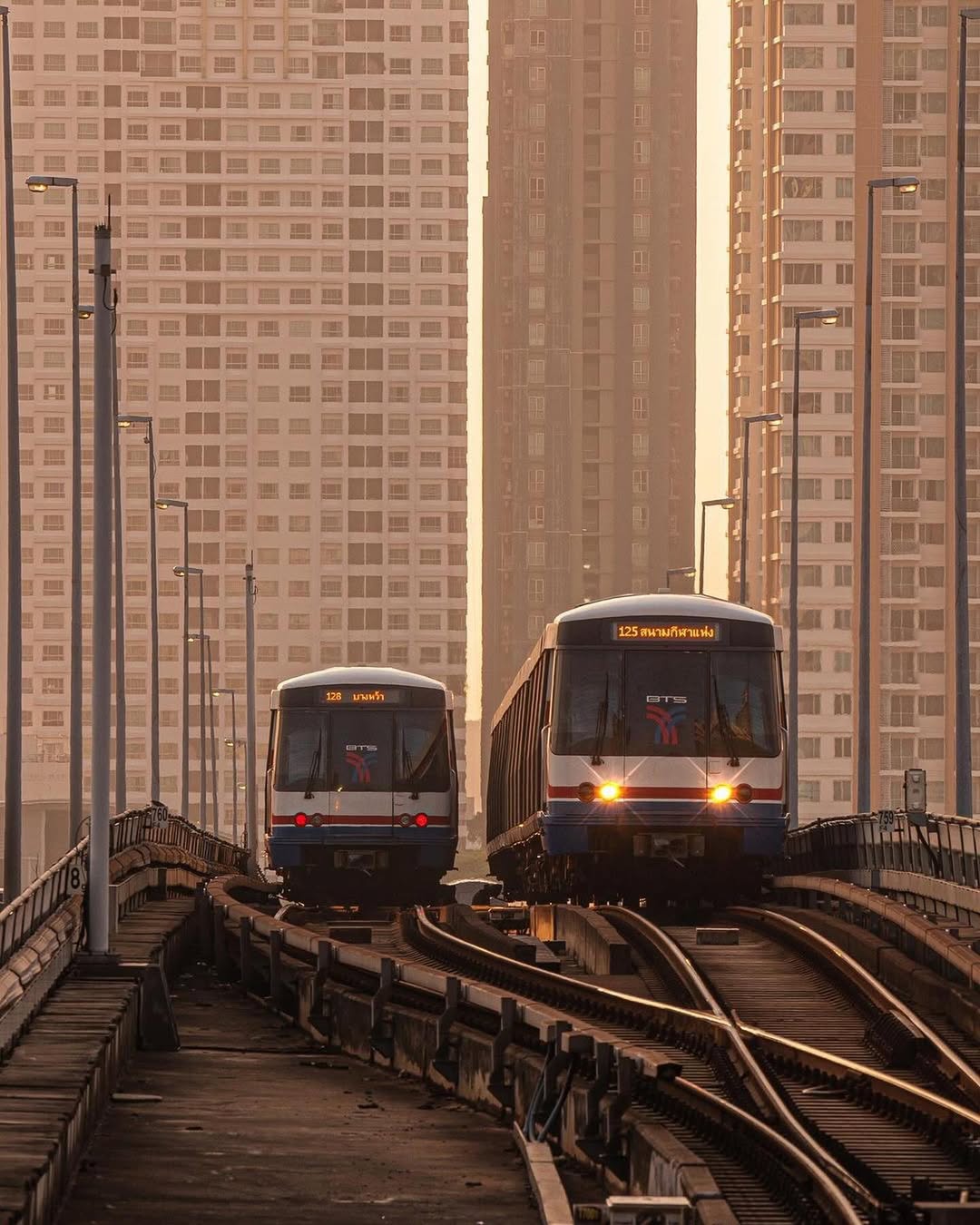
BTS Skytrain traveling on elevated tracks in Bangkok (Source: Instagram — @somersetrama9)
Predictable travel times
Because rail systems operate independently of road congestion, they allow travelers to move around the city with greater confidence, even during rush hours.
Songthaews in regional towns
In smaller cities and provincial areas, shared pickup trucks known as songthaews often serve as a form of informal public transportation. These vehicles follow flexible routes and are widely used by local residents. For visitors, riding a songthaew can offer a small glimpse into everyday life in Thai communities.
3.2. Taxis and Ride-Hailing Apps: Convenient and Flexible
Taxis remain a common way to travel within Thai cities, especially when destinations are not easily reached by public transit.
Metered taxis are widely available in major cities, and fares are generally affordable compared with many other countries. However, traffic congestion can increase travel time during busy periods.
Ride-hailing applications have become increasingly popular in Thailand. These services provide clear pricing, digital payment options, and route tracking, which many travelers find reassuring when navigating unfamiliar cities.
For visitors who prefer comfort, privacy, or direct routes, taxis and ride-hailing services offer a convenient alternative to public transportation.
3.3. Motorbike Taxis and Tuk-Tuks: Last-Mile Transportation
For narrow alleyways—locally known as soi—or short distances within busy districts, motorbike taxis and tuk-tuks offer unmatched mobility.
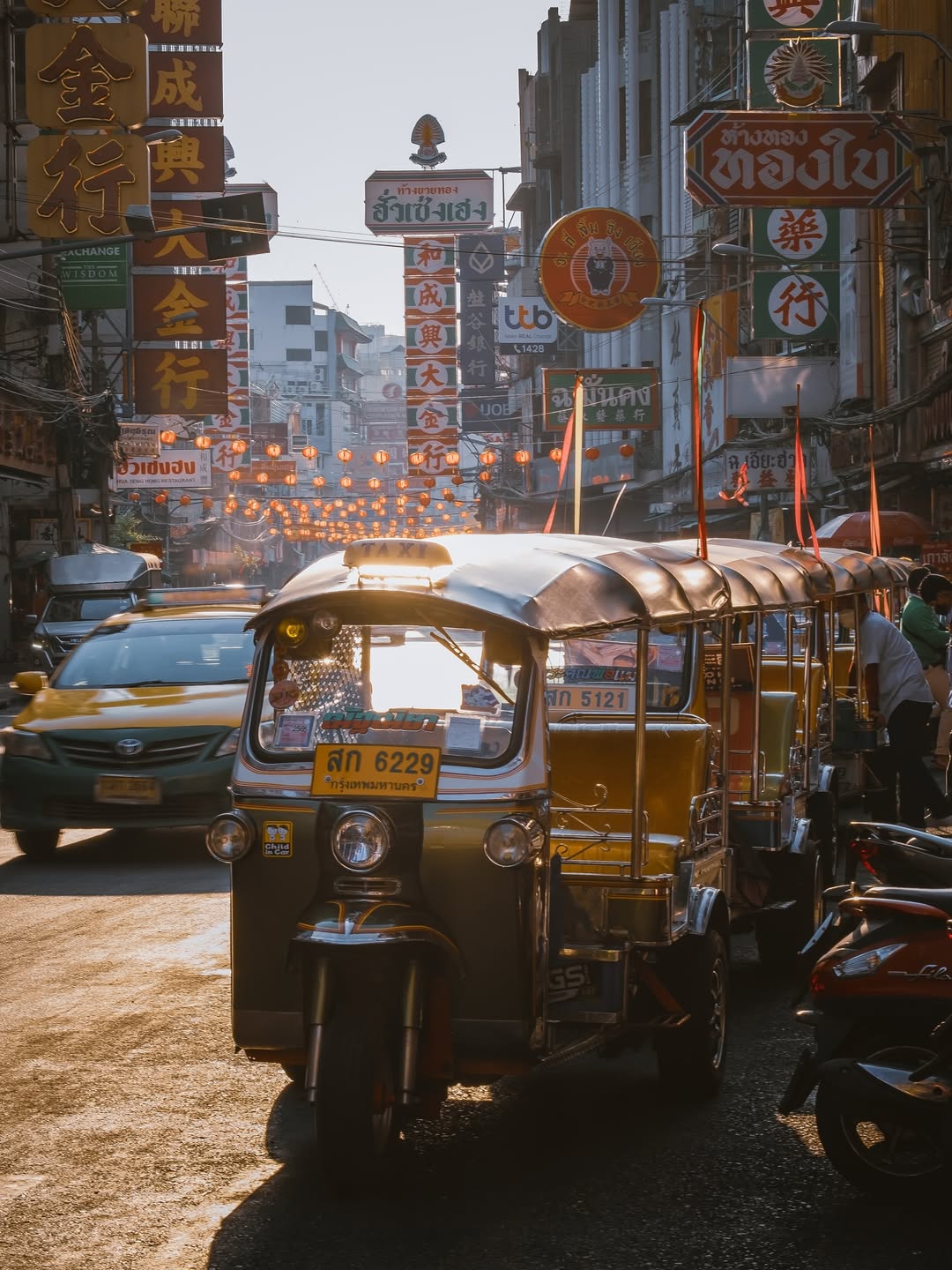
Exploring Bangkok the local way (Source: Instagram — @theoceanaut)
Motorbike taxis:
Motorbike taxis are commonly found near transit stations, markets, and busy intersections. They can move quickly through traffic and are particularly useful for short trips within crowded districts. Because rides are typically taken by a single passenger, they are best suited to solo travelers.
Tuk-tuks:
The tuk-tuk is one of Thailand’s most recognizable forms of transportation. While fares are usually negotiated in advance and may be higher than taxis for the same distance, many travelers choose tuk-tuks for the unique experience of riding through the city’s lively streets.
Although these options are not always the most economical, they can be practical for short distances and memorable for visitors experiencing Thailand for the first time.
4. Self-Driving & Rentals
Driving yourself in Thailand can offer a greater sense of independence, particularly when exploring areas that are not easily reached by public transportation. However, self-driving also requires preparation and awareness of local road conditions.
4.1. Car Rentals: Flexibility for Exploring Regions
Renting a car is often a good option for families or groups of travelers who want greater control over their itinerary. It can be particularly useful in regions where attractions are spread across large distances, such as coastal routes in southern Thailand or mountain areas in the north.
A rental car allows travelers to move at their own pace, stop at smaller towns, and visit scenic viewpoints that might otherwise be difficult to reach.
However, drivers must ensure they meet local legal requirements. A valid international driving permit and appropriate insurance coverage are generally required when renting a vehicle in Thailand.
4.2. Motorbikes and Scooters: Freedom with Responsibility
In smaller towns and island destinations, motorbikes and scooters are among the most common ways to get around. Places such as Pai, Koh Tao, or Koh Lanta are particularly popular for motorbike rentals.
Traveling by motorbike allows visitors to explore beaches, villages, and scenic roads with a high degree of flexibility. For many travelers, it also creates a stronger sense of connection with the surrounding landscape.
However, riding a motorbike in Thailand requires caution. Traffic moves on the left side of the road, and driving conditions may feel unfamiliar to visitors from other countries. Only travelers with previous riding experience should consider renting motorbikes, and wearing a helmet is essential for safety.
Self-driving can be a rewarding way to explore Thailand, but responsible driving and awareness of local road culture remain crucial for a safe journey.
5. Choosing the Right Transport: A Practical Decision Framework
Transportation choices in Thailand vary widely, and no single option works best for every traveler. Selecting the right mode of transport usually depends on balancing several practical factors.
5.1. Distance and available time
Distance and available time are often the first considerations when planning travel within Thailand. When travelers want to visit destinations that are far apart within a limited timeframe, domestic flights are usually the most efficient solution.
On the other hand, travelers with flexible schedules may prefer slower options such as trains or long-distance buses. While these journeys take longer, they can also provide a more relaxed travel experience and opportunities to observe the changing landscapes between regions.
5.2. Budget and comfort preferences
Thailand offers transportation options across a wide range of budgets.
Budget travelers often rely on trains, public buses, and shared transport services to keep travel costs low. These options may take longer but can be economical and widely available.
Travelers who prioritize comfort and convenience may choose taxis, private transfers, or domestic flights. Although these options are more expensive, they can significantly reduce travel time and simplify complex routes.
5.3. Travel companions
The number and type of travel companions can also influence transportation choices.
Solo travelers often find trains, buses, or shared vans convenient and affordable. Families with children or older travelers may prefer private vehicles or direct transfers to avoid multiple connections and reduce travel stress.
Planning transportation with travel companions in mind helps ensure that the journey remains comfortable and manageable for everyone.
Comparison of common transportation options:
|
Transport Mode |
Speed |
Cost |
Experience |
Best For |
|
Domestic flights |
Very fast |
High |
Comfortable and efficient |
Distances over 500 km |
|
Trains |
Slow |
Moderate |
Scenic and relaxed |
Routes such as Bangkok – Chiang Mai |
|
Intercity buses |
Moderate |
Low |
Practical and widely available |
Nearby provinces and secondary cities |
|
Boats and ferries |
Weather-dependent |
Moderate |
Open sea travel |
Island and coastal routes |
Ultimately, the most suitable transportation choice is the one that aligns with your schedule, budget, and travel style. When these elements are balanced well, moving from place to place becomes a natural part of the journey rather than a source of stress.
6. Transportation by Travel Style
Every traveler arrives in Thailand with a different mindset. Choosing how to move around the country is not only a practical decision based on time or cost; it should also reflect the pace of travel you hope to experience during your journey.
6.1. For First-Time Visitors
For those visiting Thailand for the first time, reliability and ease of use usually matter most. In Bangkok, the urban rail systems—BTS and MRT—offer a straightforward way to navigate the city while avoiding heavy traffic. When traveling between regions, domestic flights help reduce long travel times and simplify the overall itinerary. Ride-hailing services such as Grab or Bolt can also be particularly helpful, as they remove the need to negotiate fares and reduce potential language barriers.
6.2. For Budget Travelers
Thailand offers many transportation options that remain affordable without sacrificing practicality. Ordinary-class trains, interprovincial buses, and the colorful songthaew trucks found in many towns provide economical ways to move between places. Beyond saving money, these modes of transport often bring travelers closer to everyday local life. For many budget travelers, the journey itself becomes part of the experience rather than simply the time spent getting from one destination to another.
6.3. For Family Trips
When traveling with children or older family members, comfort and predictability become more important. Renting a car or arranging a private transfer can make travel easier by reducing the need for multiple connections and long waits at stations. Having a private vehicle also provides a quieter space to rest between destinations, helping families maintain a more relaxed rhythm throughout the trip.
6.4. For Remote Workers and Slow Travelers
Some visitors come to Thailand for longer stays, combining travel with remote work or a slower pace of exploration. For these travelers, flexibility and stability often shape transportation choices. Renting a motorbike for an extended period in smaller towns can make daily life more convenient, while overnight trains with sleeper cabins allow movement between regions without losing valuable daytime hours. This style of travel favors depth over speed, allowing more time to understand the places and communities along the way.
Regardless of travel style, leaving a little room for spontaneity often leads to the most memorable moments. An unplanned tuk-tuk ride through a busy street or a local ferry crossing that was never part of the itinerary can sometimes become the highlight of the entire journey.
7. Seasonality, Weather & Transportation Reliability
In Thailand, transportation schedules can sometimes change due to weather conditions. Seasonal weather patterns can also affect transportation services. Understanding these patterns helps travelers set realistic expectations and plan journeys more safely.
7.1. The challenge of tropical rains
The rainy season brings fresh greenery to much of the country, but it can also slow the pace of daily movement. Sudden downpours sometimes disrupt traffic in Bangkok, and during heavy rain it may take longer to find taxis or ride-hailing services. In coastal regions, weather conditions become even more important. Ferries and speedboats operate with safety as the primary concern, which means departures can be delayed or canceled when sea conditions become rough.
7.2. Fluctuations during peak travel seasons and festivals
Thailand hosts several major festivals and long holiday periods that draw large numbers of domestic travelers. During events such as Songkran or Loy Krathong, transportation demand across the country increases significantly. Trains, long-distance buses, and domestic flights often fill up quickly. Booking tickets in advance during these periods can help avoid last-minute shortages and reduce the risk of disruptions to travel plans.
7.3. Managing expectations rather than seeking certainty
Instead of searching for a single “perfect time” to travel, it is often more helpful to plan with flexibility in mind. A thoughtful itinerary leaves small buffers for weather changes or seasonal crowds. When travelers allow room for these natural variations, delays become easier to manage. In many cases, moments of waiting—whether at a ferry pier or a train station—can offer quiet opportunities to observe everyday local life and experience the slower rhythms of the place.
8. Costs & Budget Planning for Transportation
A well-planned journey is not only about choosing the right way to travel but also about managing expenses with care. Understanding how transportation costs work in Thailand helps travelers plan more confidently and avoid unexpected spending along the way.
8.1. Recognizing typical price ranges
Thailand offers transportation options across a wide range of price levels.
Short local trips on buses or shared vehicles may cost only a small amount, while long-distance flights or private transfers can be significantly more expensive. Having a general idea of typical fares helps travelers recognize reasonable prices and plan their transportation budgets more confidently.
8.2. Paying attention to hidden costs
Thoughtful budget planning also involves anticipating expenses that may not appear directly on a ticket.
- Transport surcharges: Taxi rides from Suvarnabhumi Airport may include tollway fees, while budget airlines often charge additional fees for oversized baggage.
- Peak-season price changes: Airfares and some transport services tend to increase during major holidays or busy weekends.
- “Last-mile” expenses: The cost of traveling from a bus station or train terminal to a hotel—often by tuk-tuk or motorbike taxi—can sometimes add up more than expected.
8.3. Balancing cash and digital payments
Thailand has increasingly embraced digital payment systems, especially in urban areas.
- Digital payments: Ride-hailing apps and many modern transit systems accept credit cards or QR payments, offering clear pricing and convenience.
- The importance of cash: At the same time, cash remains essential for many everyday transactions. Local transport such as songthaews, tuk-tuks, and small ferries often operate on cash payments. Keeping small banknotes—such as 20, 50, or 100 baht—makes these transactions smoother and avoids difficulties with change.
Planning transportation expenses carefully is not simply about tracking numbers. It also helps create a sense of control over the journey, allowing travelers to focus more fully on the experiences that unfold along the way.
9. Common Transportation Mistakes to Avoid
In Thailand, many travel disruptions do not come from major problems but from small misjudgments in planning. Distances may appear short on a map, connections may seem convenient on paper, and certain transport options may look efficient at first glance. Yet once the journey begins, these assumptions may not always match actual travel conditions. Recognizing a few common mistakes early on helps travelers protect both their time and their peace of mind.
9.1. Underestimating travel time
One of the most common mistakes is assuming that short distances automatically mean quick travel. In reality, movement in Thailand often depends on factors that are not visible on a map. Traffic in large cities can slow even short journeys, while mountain roads in the north or transfers between stations may take longer than expected. When an itinerary is built too tightly, a small delay can easily affect the rest of the day. Allowing a reasonable margin between connections helps keep the journey calm and manageable.
9.2. Relying too heavily on minivans
Minivans are widely used throughout Thailand because they run frequently and reach many destinations that larger buses do not. For short routes, they are often convenient. However, on longer journeys the experience can become tiring. Space is limited, luggage storage is small, and the ride can feel rushed on winding roads. When traveling for four hours or more, long-distance coaches or trains usually provide a steadier and more comfortable alternative.
9.3. Scheduling connections too tightly
Another frequent oversight occurs when travelers arrange their next journey too soon after arriving from an international flight. Immigration procedures, baggage collection, or unexpected delays can easily disrupt a tightly planned schedule. When the next train or domestic flight leaves only a short time later, the risk of missing it becomes very real. Leaving a generous gap between connections—or even planning a short rest before continuing the trip—often proves to be a wiser approach.
9.4. Ignoring the value of the journey itself
In the effort to move quickly between destinations, many travelers focus only on efficiency and overlook the experience of travel itself. Yet in Thailand, some of the most memorable moments happen along the way: a train passing slowly through open countryside at sunrise, or a small boat weaving through narrow canals lined with wooden houses. These journeys offer quiet glimpses into everyday life that cannot be found at the main attractions.
Thoughtful transportation planning is not about moving as quickly as possible. It is about finding a rhythm that allows the journey to unfold naturally, where the time spent traveling becomes part of the experience rather than something to rush through.
As we close the broader picture of transportation in Thailand, we realize that efficiency is not simply about speed or cost. Smart travel lies in the harmony between your personal itinerary and the real rhythm of the places you pass through.
Thailand warmly welcomes travelers who are flexible and open to choices. Understanding the logic of train schedules, patiently waiting out a tropical rain that slows the city’s pace, or confidently driving along scenic coastal roads—each of these moments becomes a piece of a fulfilling journey.
When you let go of the pressure to reach your destination as quickly as possible, transportation stops being a logistical obstacle and becomes a rewarding part of the adventure itself.
Let every journey in the Land of Smiles be a connection: between regions, between you and the local culture, and most importantly, with your own emotions. A thoughtful travel plan brings peace of mind, allowing you to fully appreciate the beauty and hospitality of the people here.
May your travels across Thailand be smooth, peaceful, and filled with meaningful memories.